Miami Conservancy District

Note: Due to the current events across the country, there are a lot of questions about the potential for flooding in the Dayton Area. Our next few posts will address those concerns, and share a little bit of the history regarding floods in the Dayton region.

The Miami Conservancy District was organized in 1915, in response to the Great Dayton Flood. The MCD built levees, straightened the river channel, and built 5 dams to control flooding in the Miami Valley. The Miami Conservancy District was the first major watershed district in the nation. The district and its projects are unusual in that they were funded almost entirely by local tax initiatives.
Continue reading

Exercise Dayton – David’s Cemetery

David’s Cemetery grounds are open every day, 24 hours a day for walking or visiting.

View historical monuments and beautiful scenery while getting a long walk. Don’t miss Old Glory Plaza, which was built in 2015 to memorialize members of the community, public servants, and military. Five 8-foot granite tablets pay tribute to each branch of the military.

Continue reading

Orville Wright (August 19, 1871 – January 30, 1948)

In honor of what would be Orville’s 146th birthday, here are some facts about the younger Wright Brother:

  • Orville was a snazzy dresser – Orville wore well-tailored suits, wingtips, and “snappy argyle socks.”
  • Orville loved playing the mandolin. In fact, he played it so often that it drove his sister Katherine to say, “He sits around and picks that thing until I can hardly stay in the house the point of madness.”
  • Continue reading

Gustave Wiedeke

If you’ve visited Woodland Cemetery, you may have seen this life-size, imposing monument of a man, its statue often startling guards at night. The man’s specifications and dimensions in stone match his exact measurements in real life, with careful attention to every detail, from the buttons on his suit to his piercing eyes.

Continue reading

Exercise Dayton – Link Bikes

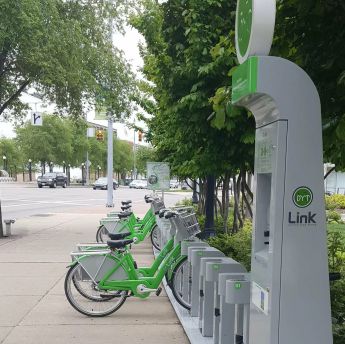
If you’ve been in the downtown Dayton, no doubt you’ve seen the bright green Link Bikes in action.

IMG-20170710-WA0010

Riders can access the bikes at any of twenty-four stations throughout the downtown area. Bikes are available for one time users, and memberships are also available. Trips are available for 30 minutes at a time, and if a rider wants to use the bike longer, they can either check the bike back in then check it out again, or they can keep the bike past 30 minutes and pay an additional fee.

Continue reading

Dayton Firsts Part 12

  • First Telegraph Message – Received in Dayton on September 17, 1847.
  • First United Brethren Church – The first United Brethren church in Dayton was organized in 1847, in a small room in the Oregon Engine House. Their first church building was erected in 1852, at Sixth Street and Logan Street, later being purchased by the city and converted into a city prison.
  • First Gas Company – Chartered February 4, 1848, by Daniel Beckel, Peter Voorhees, Daniel Stout, I.F. Howells, David Winter, J.D. Loomis, J.D. Phillips, Valentine Winters, John Mills and Daniel W. Weelock.
  • First Hebrew congregation – The first Hebrew congregation was organized in 1850. They met in the old Dayton Bank building until 1863, when they purchased the old Baptist house of worship.
  • Continue reading

Summer Events

Due to some unforeseen circumstances, we had to take a little break, but we’re back!

We’ve attended a few of the great events in Dayton so far this summer season, and wanted to share some pictures. Take a look!

Continue reading

Natalie Clifford Barney

“I built a fire to welcome her
And my voice sighed
Aloud her name. To be with her
This night, I would have died…”

Natalie Clifford Barney was born in Dayton, Ohio in 1876, to an affluent family. By age twelve, Natalie knew she was a lesbian. Although society in the late 1800’s was very conservative, Natalie knew she would “Live openly, without hiding anything.”

Natalie developed an interest in the French language as a child. Her governess often read Jules Vern stores aloud to her in French, and she had to learn the language quickly to understand the stories.  In adulthood, Natalie was fluent in French, and published most of her work in French. 

Continue reading