- The expression “You’re fired” dates back to John Henry Patterson, founder of NCR. Patterson was reported to have terminated an employee by having his desk taken outside and set on fire.
- The name of the horse in the statue with John H. Patterson in Hills and Dales Park is Spinner.
- The Ohio accent is the basis of the accent taught to newscasters – The Ohio accent is considered to be so bland that you don’t hear the accent, just the words.
- The group Stars of Joy was the first local African American gospel group to air on WHIO TV.
- Possum Run Creek got its name from the great number of possums being caught in the lowlands.
- John H Patterson urged the city to build a road over the canal, and that’s how Patterson Boulevard got its name.
- The Thomas Clegg house on the corner of First and Jefferson is Dayton’s oldest continuously occupied home. Downtown used to be a glamorous place for the rich to live in young Dayton, but the 1913 flood and increasing noise of streetcars and traffic made downtown living less appealing. The house was renovated in the early 2000s for condo use.
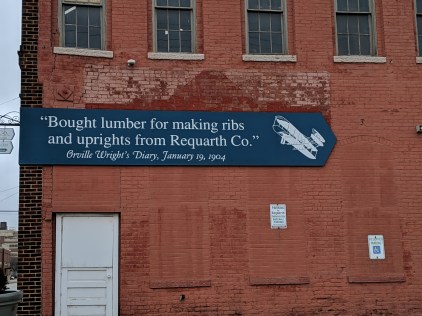
- The Wright Brothers purchased Spruce from Requarth Lumber in Downtown Dayton for the second and third Wright flyers.
Category Archives: Places & Names
Dayton’s 225th Anniversary
“April 1, 1796. Landed at Dayton, after a passage of ten days, William Gahagan and myself having come with Thompson’s and McClure’s families in a large pirogue.”
– Benjamin Van Cleve, in his journal.
“The boat party was the first to arrive. Rounding the curve in the river, where for so many years since then it has been flowing under the Dayton View bridge, the pioneers perceived before their eyes the swift current of Mad River emptying itself into the main channel, just as it had been described, and saying to each other (so we may imagine), ‘Yes, this must be the place,’ they tied the pirogue to a tree at the head of St. Clair Street and led by Mrs. Thompson, all clambered ashore.
At that moment DAYTON came on the map!”
– Charlotte Reeve Conover, The Story of Dayton.
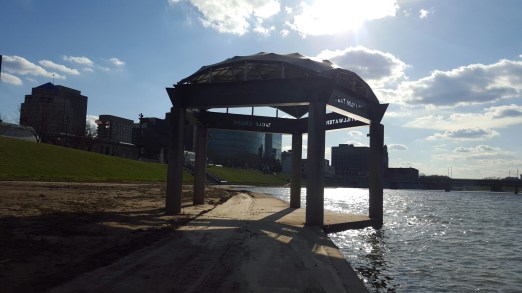
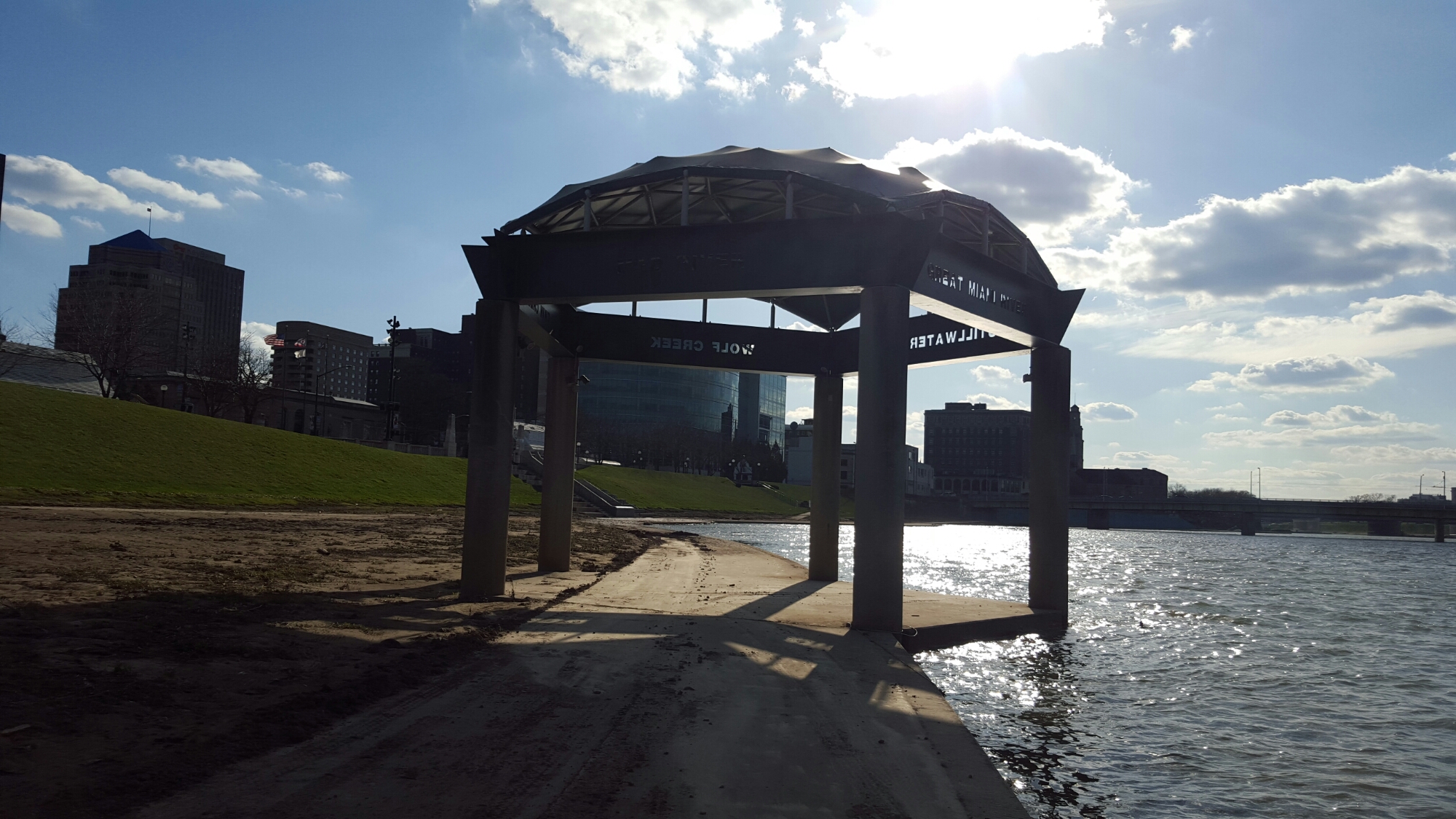
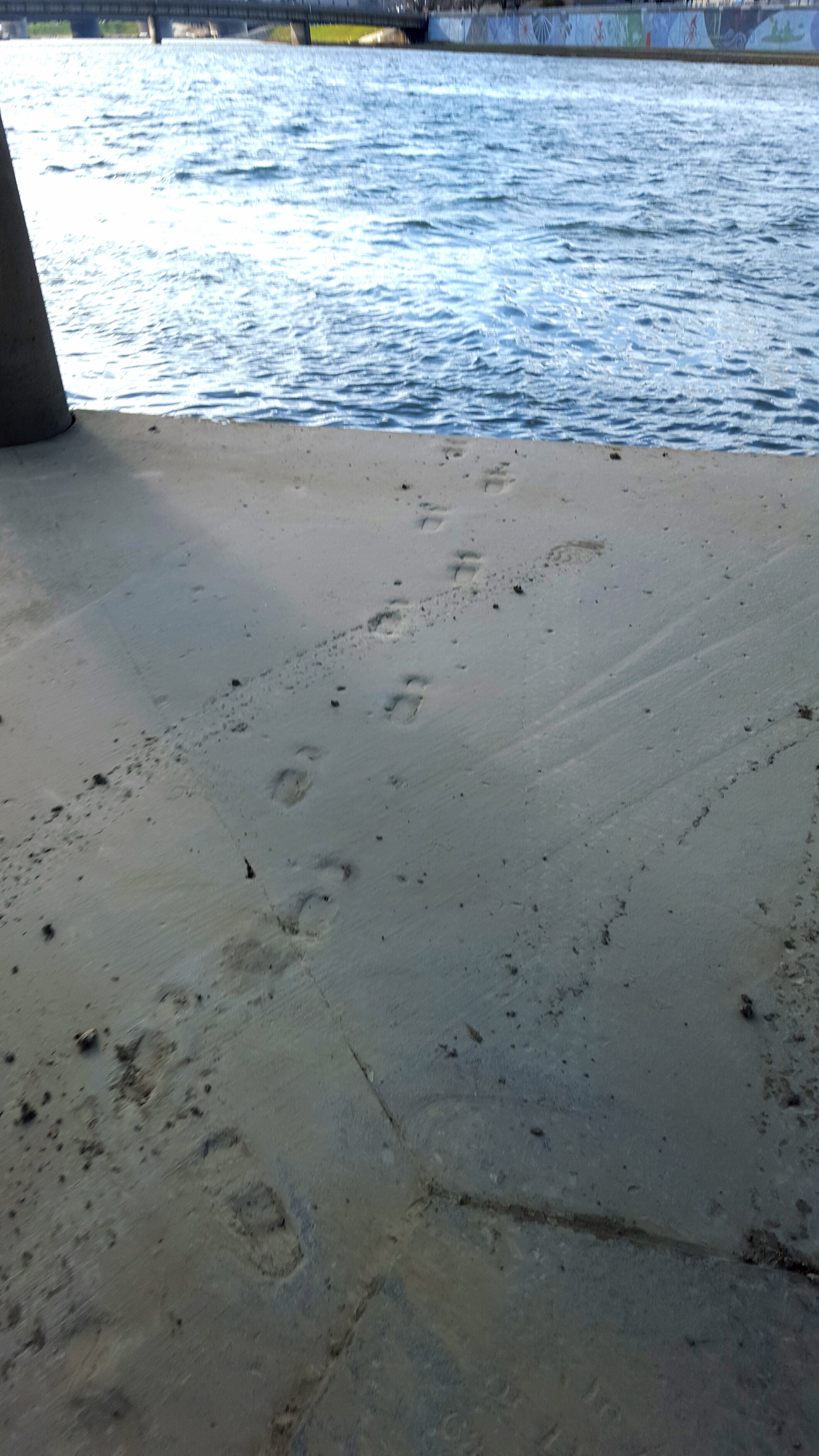
Founder’s Point at Riverscape. Underneath the canopy, there are some footprints in the concrete simulating the steps of the settlers. Also, there is an etching stating, “On April 1st, 1796, the first settlers of Dayton, led by Samuel Thompson, came ashore near this spot. The party included the first Daytonian, Benjamin Van Cleve. According to one account, the first person to set foot on shore was Catherine Van Cleve Thompson, great-great-grandmother of the Wright brothers.”
Hamilton the Musical & Dayton
The plot of Hamilton follows the life of Alexander Hamilton, which ended after a duel (or affair of honor)with politician Aaron Burr. Burr was later implicated in traitorous plots against America, along with one of Dayton’s founders, James Wilkinson, who was also Commander-in-Chief of the U.S. Army at New Orleans. Burr and Wilkinson conspired to commit treason by using their positions and working with both France and Spain at different times to take land for themselves to establish a separate country.
In 1806, Burr wrote Wilkinson a “cipher letter,” and Wilkinson panicked, double-crossed Burr, and sent a letter to President Jefferson, telling him of Burr’s activities. This letter led to Burr’s arrest for Treason. Wilkinson then testified in court, heavily emphasizing Burr’s role in the acts of Treason. Burr was later acquitted of the crimes.
The Isaac Pollack House
In 1854, two Jewish immigrants named Isaac Pollack and Solomon Rauh began a business partnership dealing whiskey and wine in Dayton from a warehouse on West Third Street.
Eight years later in 1862, Pollack served as a corporal in the civilian Squirrel Hunters during the Civil War and was regarded as a hero after the Squirrel Hunters successfully defended Cincinnati from an attack by the Confederate army. At the end of the war, Pollack and his friend Rauh started to build two identical homes on West Third Street.

Source: Dayton International Peace Museum Website
More Interesting Street Names
- Wagner Ford Road – Named after the Wagoners, who owned the land where the road forded (was shallow enough to be crossed by wading) the Miami River. Over time, the spelling changed from Wagoner to Wagner.
- Benn Street – named for M.S. Benn, a real estate dealer.
- Siebenthaler Avenue – named for the well-known nursery family.
- Stop Eight Road – The Dayton and Troy Railway had sixteen stops throughout its route. The eighth stop was at Henneke Road, and later renamed Stop Eight Road.
- Wroe Avenue – named after Al Wroe, a Dayton contractor.
- Diamond Mill Road – Named for a mill at the southern end of the road.
- Iroquois Avenue, Wyandot Street, Bannock Street, Blackfoot Street, and Cherokee Drive – named after Native American tribes.
- Michigan Avenue – the road ran alongside the Dayton & Michigan railroad.
- Harman Avenue – named for Gabriel Harman, an owner of the Gebhart Harman Bank.
- Arnold Place – Named for J.O. Arnold, long-time resident, historian and one of the planners of the Dayton View neighborhood.
Requarth Lumber Company
“Bought lumber for making ribs and uprights from Requarth Co..” – Orville Wright in his journal, January 19, 1904

Requarth Lumber was founded by Frederick August Requarth and Henry W. Meyer in 1860 as a small turning shop at Fourth Street and Wayne Avenue. They eventually moved to 447 East Monument Avenue in 1895, and have stayed there since.
Wright Library Zine
We submitted written pieces to the zine and were both lucky enough to be selected for publication in the zine glide, which was published as both a hard copy and a digital copy. There were so many entries that an additional online zine, glide on was made available as well.
You can read our stories here:
The Man Who Sent Wilbur on the Wright Path by Sara Kaushal
The Missing Benches by Bethany Kmeid
While at the reception and open mic for the event, we had the honor of meeting Jeff Wilson, Author of Ohio Legends!
Wright Library’s 80th Anniversary
On the opening night of February 14th, 1939, the lights went out, which required the crowd to tour their new library by candlelight. To celebrate 80 years of service to the community and commemorate the opening night, Wright Library held a candlelight celebration with historical items on display and a telling of the story of opening night.
It’s Our 5th Anniversary!
Since then…
170 Posts
52,095 Views
750 Followers on WordPress
387 Posts on Instagram
2,414 Followers on Instagram
288 Likes on Facebook
So many wonderful people met.
And an unquantifiable amount of facts learned about Dayton.
Here are a few highlights of the past five years:
- Most Popular Story: Hills and Dales Lookout Tower: The REAL Story
- Sara’s Favorite Story: The Sad Tale of James Murphy
- Bethany’s Favorite Story : Going Out with a Bang: My God, I’ve Shot Myself
- Two stories in the Dayton Daily News:
- Four Events Planned and Hosted:
- Dayton Unknown Riverwalk
- Dayton Unknown Summer Scavenger Hunt
- Dayton Unknown Fall Scavenger Hunt 2014
- Dayton Unknown Fall Scavenger Hunt 2016
We are so excited to see what the future holds for us!
As always, if you have any story ideas or questions you’d like us to look into, please let us know! There are so many ways to contact us – leave a comment down below, via the Contact Us page, send an email (daytonunknown@hotmail.com), send a message on Facebook or Instagram (@daytonunknown), etc..
Some Interesting Street Names
- Shoup Mill Road —Named for the mill on the Stillwater River
- Claggett Drive, Neff Road, Ensley Avenue, and Drill Avenue – named for early settlers of Dayton
- Bidleman Street — Short street named for Chas Bidleman, a Dayton dry goods merchant
- Clay Street —named for Henry Clay, a former candidate for U.S. president