Another Wright Brother Bench has been Found!

Back in November, we posted about Bethany’s search for the nine Wright Brothers Benches around town, and the fact that two are listed in incorrect places on the Ohio Outdoor Sculpture Inventory. As a result of our post here and on Facebook, a reader (thanks, Heather!!) reached out and informed us of the location of one of the missing benches on Wright-Patterson Air Force Base, in front of the historical Hap Arnold House. Bethany ventured out to explore, and confirmed that it is there! If you have any idea where the last missing bench is located, please let us know!

Huffman Prairie & Simms Station

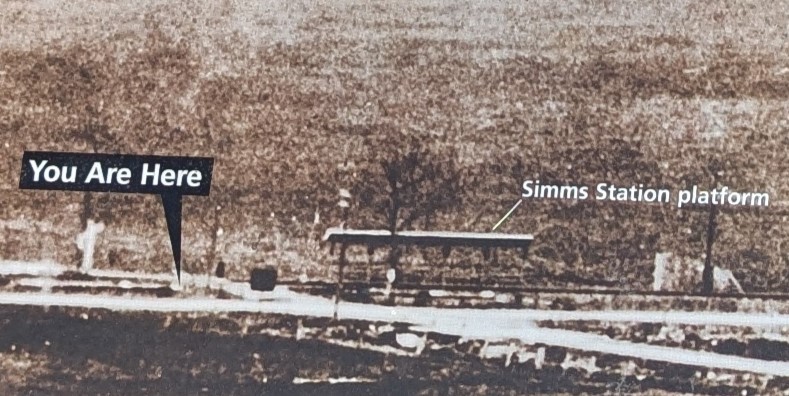
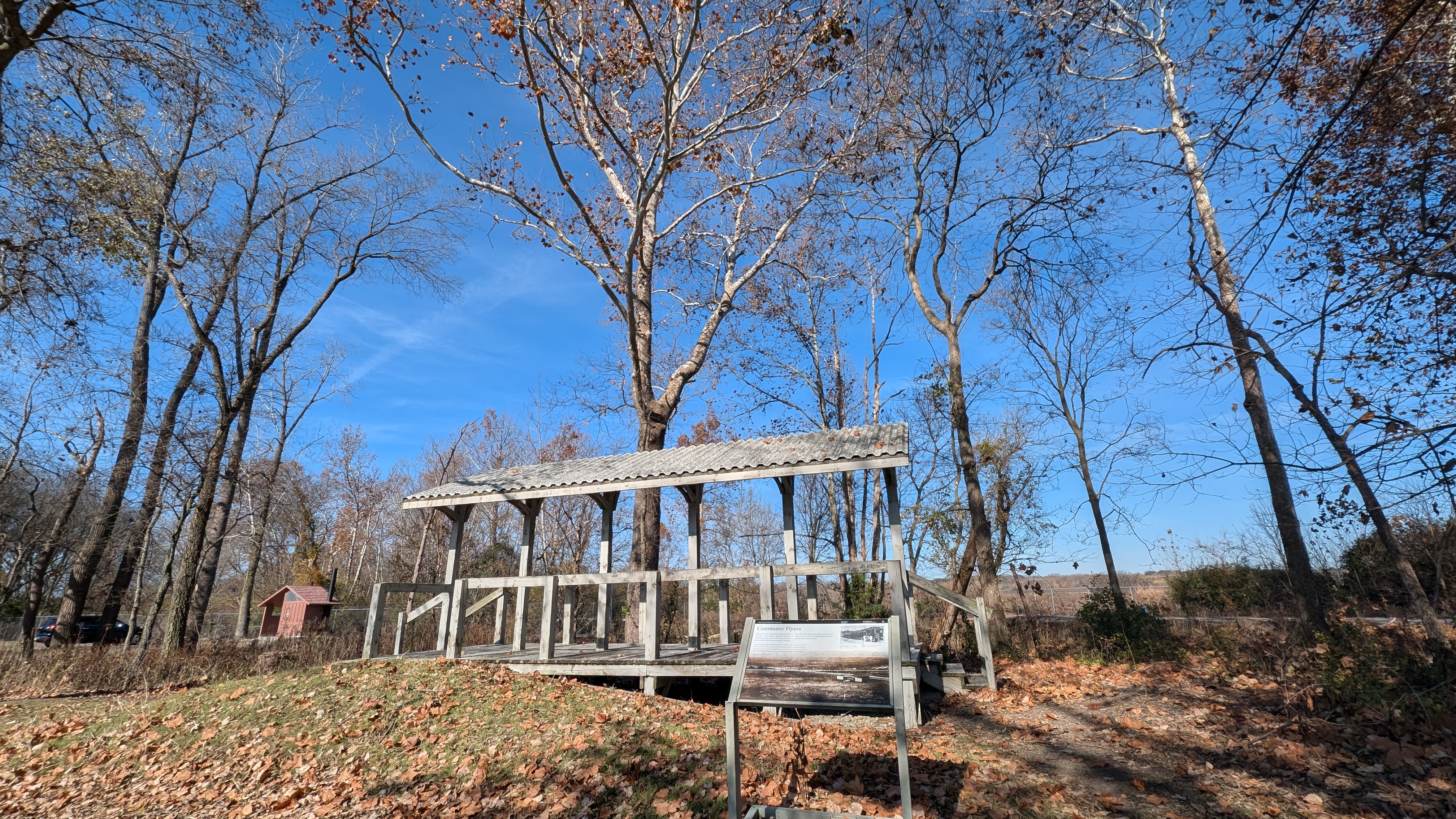
Did you know that if you go to Huffman Prairie to the location of the trolley stop station (Simms Station) and look at the sign, you can see a tree in the picture from over 100 years ago in both the picture, and right in front of you?

The Kettering Bug – The World’s First Drone

In 1917, the US Army asked Charles F. Kettering to design an unmanned “flying machine” which could hit a target from 40 miles away. Kettering designed the Kettering Aerial Torpedo (later known as the Kettering Bug) and it was built by the Dayton-Wright Airplane Company, with Orville Wright acting as the aeronautical consultant on the project. The Kettering Bug was a predecessor of today’s cruise missiles and UAVs.

Launched using a dolly-and-track system (similar to how the first flight was launched), the Bug was capable of striking targets up to 75 miles away and could travel at speeds of 50 miles per hour. The Bug consisted of an engine, fuselage, and wings and cost about $400 each to produce. The fuselage was made out of papier-mache and wood laminates, and the wings were built out of cardboard. The Bug also had a small onboard gyroscope to guide the Bug to its target.
Continue reading

Katharine Wright Haskell

The youngest of the seven Wright Children, Katharine Wright Haskell was an amazing person and she needs more credit.

When Katharine was 15, her mother Susan died of tuberculosis, leaving Katharine to care for her entire family on her own. Katharine was the only surviving daughter and the responsibility for caring for the household fell to her. Despite the amount of work she had to do at home, Katharine persisted in her studies at Central High School and attended Oberlin College. She graduated in 1898 as one of the few co-ed students in the US at the time and the only child of Susan and Milton to have a college education. She took a position teaching Latin at Steele High School and hired a maid to help with household chores.

Continue reading

More Wright Brothers Facts

Here are a few more interesting facts you may not know about the Wright Brothers!

  • The first woman to fly was Mrs. Hart O Berg. Mrs. Berg and her husband often accompanied Wilbur to various flying fields where he demonstrated his machine.
  • The first flight in Dayton occurred on September 22nd, 1910, as part of Aviation Day in Dayton. Orville flew from Huffman Prairie Flying Field in a Wright Model B flying machine. He circled the city and returned to the starting point. There were over 100,000 people to witness the flight, which lasted 33 minutes and spanned 25 miles.
  • After achieving the first flight on December 17th, 1903, Wilbur and Orville’s brother Lorin presented the story to Dayton Journal representative Frank Tunison. Tunison blew off the story, stating that a 19 second flight was not newsworthy. The first story to be run was an inaccurate piece which appeared in the Virginian Pilot and was reprinted in the Cincinnati Enquirer and the New York American. Later that day, Dayton Daily News ran an accurate story of the flight, and the Dayton Herald summarized the inaccurate version. The brothers’ flight finally made the pages of the Dayton Journal on December 19th.

Wright Brothers – Did you know?

There is so much known about Dayton’s own flying brothers, but did you know:

  • When Wilbur knew he was dying of typhoid fever, he called his lawyer, Ezra Kuhns, to make his Last Will and Testament. To his father Milton, he left $1,000. To his brothers Reuchlin and Lorin and his sister Katharine, he left $50,000 each. The remaining balance, which was over $100,000 (plus patent rights and shares) were left to Orville. Wilbur wrote in his will that he was sure Orville would use the money in very much the same manner as they would together if they were both to live to old age.
  • Also in his will, Orville left $300,000 to Oberlin College following the fulfillment of the following lifetime annuities: Lorin was to receive $4,000 per year, Reuchlin’s Widow Lulu was to receive $500 per year, Orville’s secretary Mabel was to receive $3,000 per year, and a few staff members received a yearly stipend as well. The files, notes, and other flight memorabilia were to be dispersed to museums and institutes.
  • The Wright Special, one of the brands of bicycle the brothers created, did not sell many units. According to the financial ledgers, only eight were sold.
  • Hawthorn Hill, site of the Wright House, was named so because of the Hawthorn trees growing on the land.

Eddie Breen

Eagles can fly, but can’t talk; parrots can’t really fly but can talk; so I just think I’m an Eagle.” Orville Wright to Eddie Breen, when asked why he doesn’t say much. Eddie Breen would later serve as pallbearer at Orville’s funeral.

Eddie Breen served as Mayor of Dayton from 1946-1948 then served as a member of the US House of Representatives from Ohio’s 3rd District.

Eddie had many notable members of his family, including:

  • John Breen, who along with John Ohmer had invented and manufactured the Taxi Meter. They originally planned to take the maiden voyage of the Titanic but opted instead to continue their sales trip in Europe.
  • Maurice Breen, who smuggled runaway slaves in his wagon among parts for railway construction.
  • Bernadina Focke and her sons, who set up a card table in the Arcade selling meat. This business would become a successful meat packing business that lasted until 1972.
  • Mary Lousie Breen, who spied for FDR in France and Germany during WWII.
  • Marie Berno Focke, who sang and danced with Fred Astaire in the 1920s.

Eddie Breen died on May 8, 1991, and is buried at Calvary Cemetery. For more information about these events and more stories about this family, check out the book Lucky Eddie, by Edward Focke Breen.