The River Walk begins at the northeast corner of Main Street and Monument Avenue, where you will see an 8×8 brick medallion in the pavement. This medallion announces that Dayton is the “Innovation Capital of the World,” due to the fact that Dayton has had more inventions per capita than any other city in the United States.
Besides the seven main Invention Stations, the bricks commemorate several other inventions and innovations:
- cellophane
- digital watches
- Freon
- the cracking of the Enigma Code in WWII
If you’re interested in walking around the Dayton Inventors River Walk to get a little bit of excerise, check out our post, Exercise Dayton: Riverscape Inventors Walk. We have also hosted a Photo Walk at the Inventors Walk!
Colonel Edward Deeds
Edward Andrew Deeds was born on a farm in Granville, Ohio on March 12th, 1874. Deeds graduated as valedictorian from Denison University in 1897 and came to Dayton in 1898 to work as an Electrical Engineer for the Thresher company. In the same building was the headquarters of NCR, and in 1899, Frederick Patterson offered Deeds a position at “the Cash.”
The Isaac Pollack House
In 1854, two Jewish immigrants named Isaac Pollack and Solomon Rauh began a business partnership dealing whiskey and wine in Dayton from a warehouse on West Third Street.
Eight years later in 1862, Pollack served as a corporal in the civilian Squirrel Hunters during the Civil War and was regarded as a hero after the Squirrel Hunters successfully defended Cincinnati from an attack by the Confederate army. At the end of the war, Pollack and his friend Rauh started to build two identical homes on West Third Street.

Source: Dayton International Peace Museum Website
This Day in History – April 30th, 1802
Arthur St. Clair, one of the co-founders of Dayton, was a staunch Federalist and opposed Ohio becoming a state. As Governor of the Northwest Territory, he believed that Federalists could keep control by keeping the states small. The population requirement to become a state was 60,000. For reference, Kettering’s population in 2017 was 55,175.
Happy 224th Birthday, Dayton!

As our favorite Dayton historian, Charlotte Reeve Conover put it in the beloved book The Story of Dayton:
“The boat party was the first to arrive. Rounding the curve in the river, where for so many years since then it has been flowing under the Dayton View Bridge, the pioneers perceived before their eyes the swift current of Mad River emptying itself into the main channel, just as it had been described, and saying to each other (so we may imagine), ‘Yes this must be the place,’ they tied the pirogue to a tree at the head of St, Clair Street and led by Mrs. Thompson, all clambered ashore.
At that moment, DAYTON came on the map!”
Bill Yeck – The Father of the Park District
While under his direction, the Park District grew to include 43 parks with over 893 acres of open, green spaces. At the time the Park District was formed, there was a state law that allowed only one public park per township and nobody knew what kinds of parks were needed, where parks should be located, or how the parks should be maintained, especially with no funding. Bill Yeck researched, visited other park districts and sought help from experts and enthusiasts to build the Centerville-Washington Park District.
One Missing Bench Found
As you may remember from the story of the Missing Benches, there has been a mystery surrounding the rest of the benches that are supposed to be located all around the Miami Valley.
Well, one of the benches has been located! Right in front of the Wright Brothers Airport in Springboro, with a lovely mural with the Wright Brothers in the background.
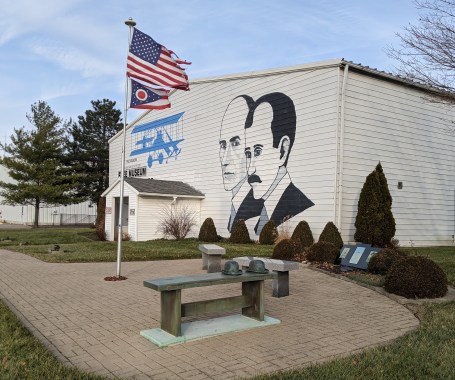
The remaining benches really are a mystery:
- Two at the National Museum of the US Air Force – Bethany spoke to the staff and volunteers (including a groundskeeper) at the museum, and nobody had any recollection of the benches.
- One somewhere at the Dayton International Airport
– no idea where!
Have you seen one of these benches at one of these two locations? We’re still hunting!
Happy Valentine’s Day
Happy Valentine’s Day, Dayton!
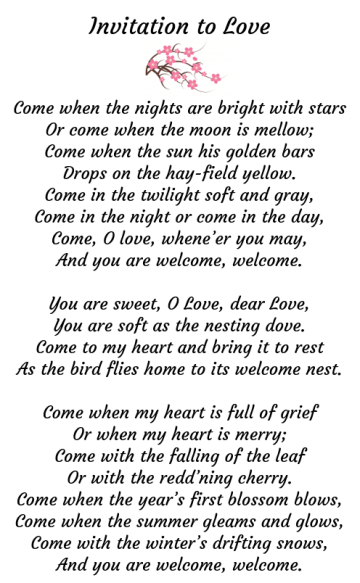
We thought we’d celebrate by sharing two of our favorite love poems by Dayton’s very own Paul Laurence Dunbar. Enjoy!

More Interesting Street Names
- Wagner Ford Road – Named after the Wagoners, who owned the land where the road forded (was shallow enough to be crossed by wading) the Miami River. Over time, the spelling changed from Wagoner to Wagner.
- Benn Street – named for M.S. Benn, a real estate dealer.
- Siebenthaler Avenue – named for the well-known nursery family.
- Stop Eight Road – The Dayton and Troy Railway had sixteen stops throughout its route. The eighth stop was at Henneke Road, and later renamed Stop Eight Road.
- Wroe Avenue – named after Al Wroe, a Dayton contractor.
- Diamond Mill Road – Named for a mill at the southern end of the road.
- Iroquois Avenue, Wyandot Street, Bannock Street, Blackfoot Street, and Cherokee Drive – named after Native American tribes.
- Michigan Avenue – the road ran alongside the Dayton & Michigan railroad.
- Harman Avenue – named for Gabriel Harman, an owner of the Gebhart Harman Bank.
- Arnold Place – Named for J.O. Arnold, long-time resident, historian and one of the planners of the Dayton View neighborhood.
Requarth Lumber Company
“Bought lumber for making ribs and uprights from Requarth Co..” – Orville Wright in his journal, January 19, 1904
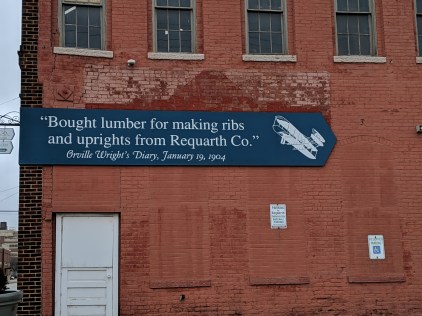
Requarth Lumber was founded by Frederick August Requarth and Henry W. Meyer in 1860 as a small turning shop at Fourth Street and Wayne Avenue. They eventually moved to 447 East Monument Avenue in 1895, and have stayed there since.
 Dayton Unknown