One Missing Bench Found

As you may remember from the story of the Missing Benches, there has been a mystery surrounding the rest of the benches that are supposed to be located all around the Miami Valley.

Well, one of the benches has been located! Right in front of the Wright Brothers Airport in Springboro, with a lovely mural with the Wright Brothers in the background.
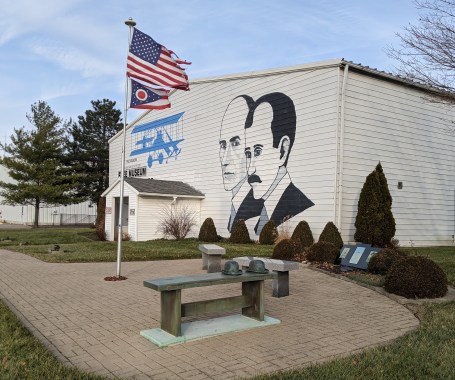
Found Bench

The remaining benches really are a mystery:

  1. Two at the National Museum of the US Air Force – Bethany spoke to the staff and volunteers (including a groundskeeper) at the museum, and nobody had any recollection of the benches.
  2. One somewhere at the Dayton International Airport

– no idea where!
Have you seen one of these benches at one of these two locations? We’re still hunting!

More Interesting Street Names

  • Wagner Ford Road – Named after the Wagoners, who owned the land where the road forded (was shallow enough to be crossed by wading) the Miami River. Over time, the spelling changed from Wagoner to Wagner.
  • Benn Street – named for M.S. Benn, a real estate dealer.
  • Siebenthaler Avenue – named for the well-known nursery family.
  • Stop Eight Road – The Dayton and Troy Railway had sixteen stops throughout its route. The eighth stop was at Henneke Road, and later renamed Stop Eight Road.
  • Wroe Avenue – named after Al Wroe, a Dayton contractor.
  • Diamond Mill Road – Named for a mill at the southern end of the road.
  • Iroquois Avenue, Wyandot Street, Bannock Street, Blackfoot Street, and Cherokee Drive – named after Native American tribes.
  • Michigan Avenue – the road ran alongside the Dayton & Michigan railroad.
  • Harman Avenue – named for Gabriel Harman, an owner of the Gebhart Harman Bank.
  • Arnold Place – Named for J.O. Arnold, long-time resident, historian and one of the planners of the Dayton View neighborhood.

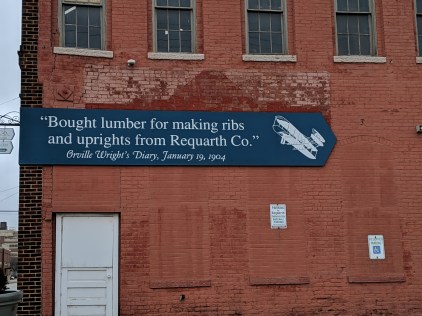
Requarth Lumber Company

Bought lumber for making ribs and uprights from Requarth Co..” – Orville Wright in his journal, January 19, 1904

OW Requarth

Requarth Lumber was founded by Frederick August Requarth and Henry W. Meyer in 1860 as a small turning shop at Fourth Street and Wayne Avenue. They eventually moved to 447 East Monument Avenue in 1895, and have stayed there since.

Continue reading

This Day in History – September 22nd, 1942

On September 22, 1942, Tony Stein enlisted in the Marine Corps. Tony graduated from Kiser High School in 1939 and worked for General Motors in the Delco Division before enlisting.

As Dayton’s only WWII Congressional Medal of Honor Winner, Tony earned the honor by his heroic actions during the Battle of Iwo Jima. While in battle, Tony went from one enemy pillbox to the next, killing 20 enemy soldiers. His gun was shot out of his hands not once, but twice. When Tony ran out of ammunition, he ran back to the beach for more, carrying a wounded fellow soldier with him. Tony removed his shoes and helmet to help him move quicker. When Tony dropped the soldier off at the beach, he grabbed ammo and ran back into action, dropped off the ammo, then returned with another injured soldier. Tony repeated this cycle many times, ultimately rescuing eight soldiers. The Marine Corps still honors him through the Tony Stein Workout.

Tony died on March 1, 1945. He was killed after volunteering to locate enemy machine gun placements that pinned down his company at Mount Suribachi. Tony was buried with honors in Calvary Cemetery in Dayton.

For the full story, check out our story Tony Stein – Dayton’s Superhero.

July 20th, 1969 – 50 years ago

That’s one small step for man, one giant leap for mankind.” – Neil Armstrong, July 20th, 1969

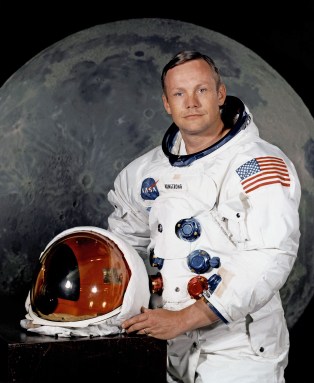
This weekend marks the 50th anniversary of men first walking on the moon. The Apollo 11 spaceflight was launched from Florida on July 16th, 1969, and the first man to set foot on the moon was Neil Armstrong, from Wapakoneta – about an hour north of Dayton.

Neil_Armstrong_pose                                                         Source: Wikipedia

Continue reading

This Day in History – June 27th, 1872

Paul Laurence Dunbar was born on June 27, 1872 in Dayton, Ohio on Howard Street. His parents were former slaves who escaped from Kentucky, then met in Dayton after the war. He published his first works in 1892 while working as an elevator operator. Overall, Dunbar wrote twelve books of poetry, four books of short stories, five novels, and a play before his death in 1906.

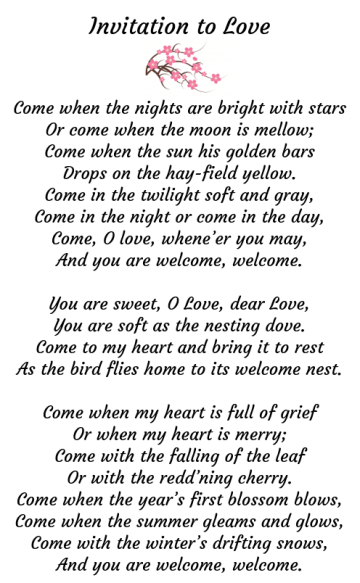
My lady love lives far away,
And oh my heart is sad by day,
And ah my tears fall fast by night,
What may I do in such a plight.

Why, miles grow few when love is fleet,
And love, you know, hath flying feet;
Break off thy sighs and witness this,
How poor a thing mere distance is.

My love knows not I love her so,
And would she scorn me, did she know?
How may the tale I would impart
Attract her ear and storm her heart?

Calm thou the tempest in my breast,
Who loves in silence loves the best,
But bide thy time, she will awake,
No night so dark but morn will break.

But though my heart so strongly yearn,
My lady loves me not in turn,
How may I win the blest reply
That my void heart shall satisfy.

Love breedeth love, be thou but true,
And soon thy love shall love thee, too;
If Fate hath meant you heart for heart,
There’s naught may keep you twain apart.

Wright Library Zine

Back in April we mentioned that to celebrate their 80th anniversary, Wright Library published an art and literary zine made up of poetry, short stories, essays, and art focusing on the Miami Valley, the Wright Brothers, and more.

We submitted written pieces to the zine and were both lucky enough to be selected for publication in the zine glide, which was published as both a hard copy and a digital copy. There were so many entries that an additional online zine, glide on was made available as well.

You can read our stories here:
The Man Who Sent Wilbur on the Wright Path by Sara Kaushal
The Missing Benches by Bethany Kmeid

While at the reception and open mic for the event, we had the honor of meeting Jeff Wilson, Author of Ohio Legends!

This slideshow requires JavaScript.

This Day in History – May 1st, 1863

In a speech in Mount Vernon on May 1, 1863, Clement Laird Vallandigham declared that the Civil War was being fought to gain “the freedom of the blacks and the enslavement of the whites.

He went on to say that President Abraham Lincoln was using the war as an excuse to squelch Constitutional rights.

Days later, federal troops broke down the door at his home on Wilkinson and First Streets in Dayton. He was arrested for violation of General Order 38, which prohibited declarations of sympathy for the Confederacy.

Continue reading