Unfortunately, the journey did not continue for the lovely woman. The man roused the innkeeper in the middle of the night and told him to fetch a doctor quickly, there was something wrong with his wife. Despite medical treatment, she died that night.
During this time period, it was not customary or required for guests to register or identify themselves to get a room for the night. Despite renting the room and receiving medical treatment, this woman’s identity was not revealed, nor was her husband’s. As the undertaker prepared for the funeral and presented the bill to the husband, he asked for their names. The traveler remarked, “I will pay you, but I will not tell my name.”
At every turn, he was asked again for her name, but again he declined to reveal their identities. Although they were certain he’d reveal her name for the tombstone, they were again denied. Instead, her tombstone was simply inscribed with:
A Stranger
Died Jan 4, 1851
Aged 24
Her kind and gentle spirit’s gone,
To a world of light above.
Adding to the mystery, flowers started appearing on her grave every Memorial Day. This tradition continued for years and was still occurring 81 years later in 1932 when Dayton Daily News reported on this story. The groundskeeper for Old Greencastle Cemetery, where she is buried, reported the flowers would mysteriously show up at the grave, but he never saw a person leaving them. A man with gray hair and long gray beard had been frequently spotted walking through the graveyard. Some speculated he was the husband, long since dead but making an appearance from beyond the grave to leave flowers. Could it have been the son leaving flowers on his mother’s grave? The question remains, who was this woman and why wouldn’t they identify her?
Dayton TikTokers
- Looking for a new place to eat in the Dayton area? Check out the restaurant reviews from Tiktok user @CrustyMcG.
- Learn about Dayton architecture and history with author of Lost Dayton, Andrew Walsh @daytonvistas
- @daytondotcom shares “What to know, What to do, What to Love” in Dayton
- @abet_artistry shares her life in Dayton
- @straightbussinfood tries restaurants in the Southwest Ohio area
- @natalie_reports is a food & dining reporter for the Dayton Daily News
- Explore Dayton with @girlaboutDayton
- Get news stories with @daytondailynews
- @fairbornone shares news and events in Fairborn
- Dayton-rooted @ohhanasun posts content from Dayton and Cincinnati
- @themiamivalleyexp spotlights small businesses in the Dayton area
Check out these businesses from Dayton with their own TikToks:
- @thedollarbookswap
- @roseomn04 – El Rancho Grande in Fairborn
- @baker.benji
Sara’s Appearance on WYSO Book Nook

To listen to her interview: Book Nook: ‘Murder in Victorian Dayton: The Tragic Story of Bessie Little’ by Sara Kaushal
Dayton Codebreakers – Sir Dermot Turing’s Visit
Desch and his team worked in one of NCR’s buildings decoding the messages using the American Bombe Machine and would then send the messages to Washington D.C. as intelligence. While working with the American Bombe Machine, Alan Turing – known for cracking Germany’s Enigma code – visited Joseph Desch in Oakwood and at the NCR building.
Retired RAF Captain Andrew Lloyd, along with the organization he founded, Oakwood Unsung Heroes, have been working to showcase this piece of history by having a City of Oakwood proclamation for the month of May to be Codebreaker Month, and they have an exhibit on display at Wright Memorial Public Library in collaboration with the National Cryptologic Museum.
On May 8th, the nephew of Alan Turing, Sir Dermot Turing, will be speaking at the Dayton International Peace Museum and at Carillon Park. For both events, tickets are free, but limited.
- May 8th at 11am @ Dayton International Peace Museum
- May 8th at 7:30pm @ Carillon Park
If you’re interested in reading more about this topic:
- X, Y & Z by Sir Dermot Turing
- The Codebreakers of Bletchley Park: The Secret Intelligence Station that Helped Defeat the Nazis by Sir Dermot Turing
- The Enigma Story: The Truth Behind the ‘Unbreakable’ World War II Cipher by Sir Dermot Turing
- Reflections of Alan Turing: A Relative Story by Sir Dermot Turing
- The Secret in Building 26: The Untold Story of America’s Ultra War Against the U-boat Enigma Codes by Jim Debrosse
Dayton Area Book Crawl
- Jay and Mary’s Book Center
1201 Experiment Farm Road
Troy, OH 45373 - Browse Awhile Books
118 East Main Street
Tipp City, OH 45371 - Around About Books
8 West Main Street
Troy, Ohio 45373 - New and Olde Pages
856 Union Boulevard
Englewood, OH 45322 - The Cozy Booknook
4720 South Dixie Avenue
Moraine, OH 45439 - Rabbit Hole Books
29 West First Street
Dayton, OH 45402 - Star City Booksellers
55 South Main Street
Miamisburg, OH 45342
Start your journey at any location and pick up a passport. Get the passport stamped at each location and be entered to win prizes! Make sure to stop in at New & Olde Pages for author speed dating from 1 to 3 pm. Sit for 3 minutes with each author and let them pitch their book or series to you.
Katt Williams to be Honored in Cincinnati
Williams was born in Cincinnati in 1971 and moved to Dayton with his Jehovah’s Witness parents. During that time, he learned multiple languages, including Creole and French, and he lived in Haiti for 18 months as part of religious missions. Williams emancipated himself from his parents at 13, then moved to Florida and supported himself as a street vendor.
Williams has found success through his stand-up comedy, acting, and music career. Although he has faced many legal issues, he has continued with his career and received an Emmy for Outstanding Guest Actor in a Comedy Series for his appearance on the show Atlanta. His “Heaven on Earth” comedy tour has dates across the US through November.
Another Wright Brother Bench has been Found!


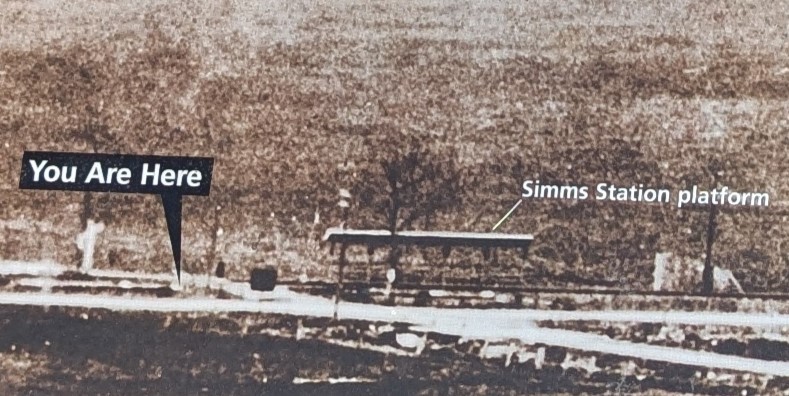
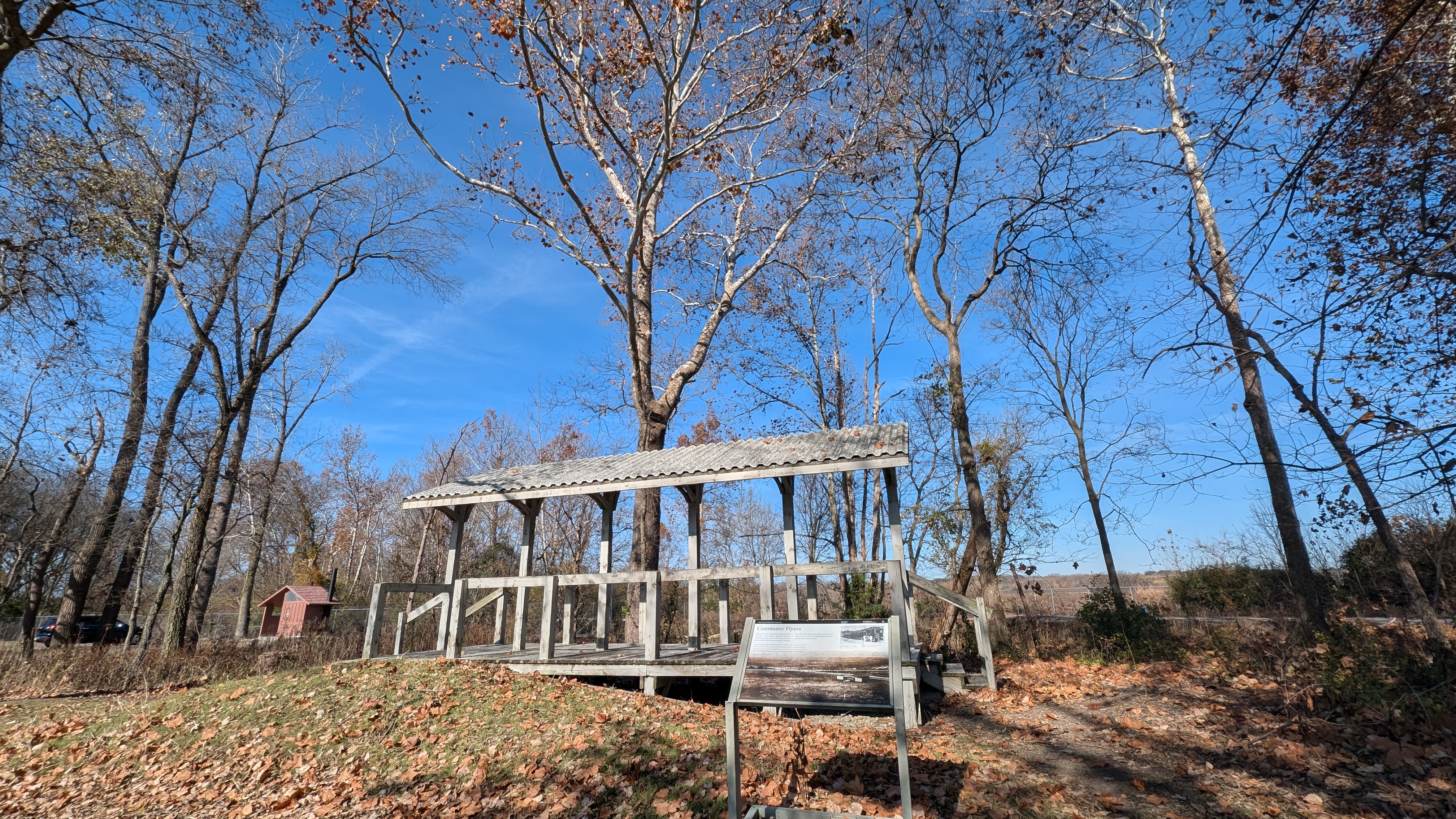
Huffman Prairie & Simms Station
Quick Dayton Stories
-
- December 1946 – Police rushed to the scene after a woman reporting a freshly dug grave near her home. The grave was adorned with a large floral display. Deputy Sheriff Ben Brown dug for several minutes before finding a large box tied with a fancy ribbon. The scene was silent as the Deputy Sheriff lifted the box from the ground and untied the ribbon to see a large silk handkerchief inside. In it, he found a dead canary.
- March 1802 (reported December 1802) – While Jonathan Dayton attended a session of Congress in Washington DC, he had an experience of “Spontaneous Combustion”. While undressing himself at bedtime, Dayton removed a pair of silk stockings he wore over a pair of woolen stockings. He dropped the silk stockings onto a woolen carpet near the side of the bed. One of his garters fell down with the silk stockings. The white woolen stockings were tossed farther away, near the foot of the bed. Dayton noticed a bit of sparking when he separated the silk stockings from the wool ones, which he gave no mind, since he had seen that before. He slept through the night as normal. In the morning a servant entered in the morning to kindle the fire, waking Dayton. Dayton then noticed his silk stockings were a brown color and one of his leather slippers was burnt. The garter that fell next to the silk stocking was charred but intact. Upon closer examination, the leather slipper and the garter only were burnt in the parts that had been in contact with the silk stockings. Both Dayton and the servant attending him noted there were no candles burning in the room and the fireplace was at least 9 feet away and burning low. Based on the evidence, they concluded it was spontaneous combustion.
- September 1997 – A plain pine box with the skeletal remains of at least two early Daytonians, buried in St Henry Cemetery in the late 1800s, was laid to rest during a service and burial at Calvary Cemetery. Workers found the bones while laying a sewer line for the Miami Valley Hospital’s new Emergency and Surgery Complex. Cemetery Superintendent Rick Meade provided green carpeting and a red tent, hospital carpenters made the pine box, and Miami Valley sent a pot of mums for the service. The land had been the site of St Henry’s Catholic Cemetery. The city of Dayton had grown around St Henry’s, leaving it with no room to expand. The cemetery hit hard times, unable to keep up with maintenance. That’s when the trustees decided to sell the cemetery and move the bodies to Calvary. Roughly 6,000 bodies were moved from St Henry to Calvary, and 4,013 were unclaimed. The unclaimed were buried in a mass grave at Calvary Cemetery where the Memorial Chapel stands. The chapel was built from funds derived from the sale of St Henry and dedicated to the unclaimed souls. The Memorial Chapel was dedicated on All Souls Day, November 2, 1902. In the service provided for the reinterred, Rev. Richard Knuge, chaplain at Miami Valley Hospital, read “We commend these remains to the Lord, that the Lord may embrace them in peace and raise up their bodies on the last day”, from the Roman Ritual, Order of Christian Funerals. “We are dust and into dust we shall return. Blessed is the Lord.”
The Grave at UD
The Founder of the Society of Mary, Father Leo Meyer, came from Alsace to Cincinnati to serve as a missionary in 1949. He found the area in the midst of a cholera epidemic and volunteered to help. The next year he was sent by the Bishop to Dayton to serve at Emmanuel Church, where he met John Stuart.
Stuart owned 125 acres of farmland in the Southeastern section of Dayton. Stuart had come from Scotland and wanted to return, and Father Meyer wanted to establish a colony of Marianists. The two negotiated and made a deal. Stuart would give the land to Father Meyer and allow him to pay back when he could, and Father Meyer would give him his St Joseph Medal as collateral. It took twenty years to pay the debt and get back the medal.
Mary Stuart, infant daughter of John, was buried in St Henry Catholic Cemetery, on Main Street near Ashley and Frank Streets. When St Henry was sold and the bodies exhumed, Father Meyer moved Mary and her monument to the UD Campus in order to fulfill his promise to John Stuart that he would always care for the child’s grave. When the Marianist cemetery was established in the present location, Mary’s grave was moved along with the rest. Stewart Street is named for the Stuart family, but the name was misspelled.
 Dayton Unknown