
The Miami Conservancy District was organized in 1915, in response to the Great Dayton Flood (in 1913). The MCD built levees, straightened the river channel, and built 5 dams to control flooding in the Miami Valley. The Miami Conservancy District was the first major watershed district in the nation. The district and its projects are unusual in that they were funded almost entirely by local tax initiatives.
The small village of Osborn, Ohio had little damage from the flood, but experienced issues from its aftermath. The village was located directly in the path of the new Huffman flood plain. The citizens of Osborn decided not to abandon their home, but instead, decided to move their homes to just outside Fairfield, Ohio. Years later, the two towns merged, and changed their name to Fairborn, Ohio.
The 5 dams built to control flooding are:
- Englewood Dam – Regulates the flow of the Stillwater River into the Great Miami River
- Germantown Dam – Regulates the flow of the Twin Creek into the Great Miami River
- Huffman Dam – Regulates flow of Mad River into Great Miami River
- Lockington Dam – Regulates flow of Loramie Creek into Great Miami River
- Taylorsville Dam – Regulates the Great Miami River
Beaver’s Mini Mart vs Goliath
The nearest Buc-ee’s is 16 miles from the Beaver’s Mini Mart location in the middle of a city that has been using beaver iconography for decades via school mascots, team logos, business advertisements and more. The small convenience store has no gas pumps, no public bathrooms, and a logo that looks nothing similar.
Many want to help support this small business. Here are a few ways to do so:
- Shop at their store – 1592 Hanes Road, Beavercreek, 45434
- Support their GoFundMe
- Buy Beaver Mini Mart shirts from CincyShirts.com
- Buy Beaver Mini Mart Cookies from The Original Goodie Shop. Stop by their store at 2116 Tremont Center, Upper Arlington, 43221 or call 614-488-8777
- Buy Beaver’s Mini Mart merch from Teepublic
Please note, there is a lot of misinformation going around about the ownership of the Beaver’s Mini Mart. We ask that you do your due dilligence and your own research before forming your opinion, or having a negative reaction to their plight.
Happy 4th of July!
Local Author – J.E. Irvin
Irvin’s novel The Dark End of the Rainbow won the Jeremiah Healey Mystery Fiction Contest. Her next book, The Rules of the Game was a finalist for the same award. Irvin is a member of Sisters in Crime, Central Ohio Fiction Writers, and Buckeye Crime Writers. She also serves on the Springboro City Park Board and is a member of the Springboro Area Historical Society.
Some of her published works include:
- Hollowed Bone, published in the Sky Island Journal Issue # 25 in 2023
- ALL THE ODDS ARE EVEN, published in the Nexus Literary Journal in Spring 2015
- PAWNS, published in the Alfred Hitchcock Mystery Magazine in May 2011
- THE FABRIC OF OUR FEARS, published in The Broken Plate in Spring 2010
Fined for Helping a Prisoner
Messler was accused of harboring Ruth Isley, aka Margaret Williams after she escaped from the workhouse on September 3. According to her testimony, she escaped by prying off a door lock, crossing a roof, and entering a window of the Antler Hotel located on 6th Street. From there she ran to Messler’s garage, where she stayed all night.
Source: Fined For Help Given Prisoner, Dayton Herald, October 9, 1917, Page 16
A Fire in 1900
- J.P. Wolf & Sons, Tobacco Merchants
- E. Bimm & Sons, Grocers
- Benedicts & Co, Cigar Manufacturers
- The Dayton Paper Novelty Company
The Big Four Freight depot was located in the back, and had minimal damage. The office building was destroyed, but the slate roof prevented the rest of the company from more damage. There was an estimated $500,000 in damages to the district.
It took 3 hours for the flames to be under control, and there were many injuries:
- Night Watchman Snedecker was overcome by smoke and later found unconscious by other firemen.
- Another fireman, Louis Swaneger, was taken to his home, badly frozen.
- Three firemen, George Coy, George Nienaber, and George Griesheimer were buried when the east wall of the J.P. Wolf & Sons building collapsed. Nienaber and Griesheimer were not badly injured.
- Many other firefighters and volunteers were treated at a makeshift hospital located in a nearby home.
Clemens “Clemmy” Focke
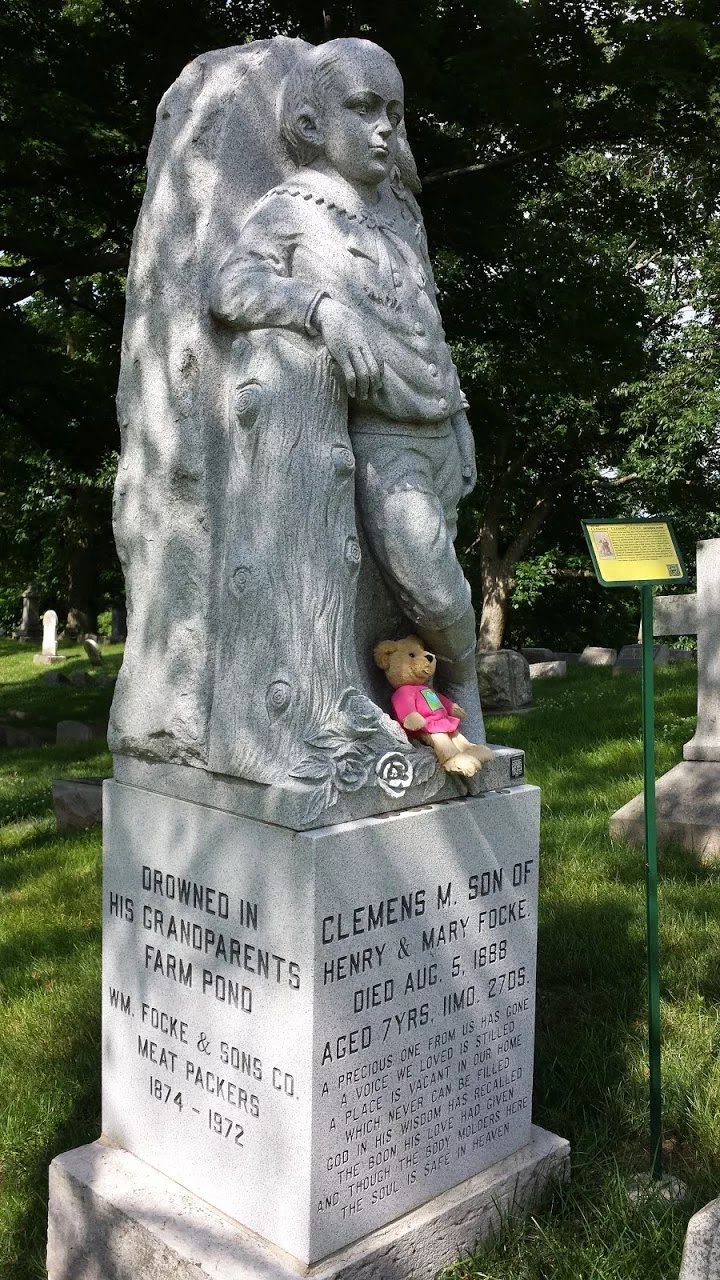
Clemmy and his mother had just left early mass and headed to his grandmother’s house for a visit. When they arrived, Clemmy joined his younger brother Edward outside while their mother and grandmother headed into the house. The boys played outside for a bit and some other boys from the neighborhood joined them. It was hot outside and one of the boys suggested they go take a swim.
Continue reading
1936 “Treasure Hunt” for Dayton History Facts
- Presiding Judge: Hon Francis Dunley
- Associate Judges: Isaac Spinning, Benjamin Archer, John Ewing
- Officers:
- George Newcom, Sheriff
- Benjamin Van Cleve, clerk
- James Miller, coroner
The court opened July 27, 1803, but there were no cases, so court adjourned that evening. Most of the male population of Dayton had turned out for the opening, and it was met with great excitement. The judges and lawyers slept in one room of the tavern overnight and left together the next morning to open court in Xenia. The next session of court was not held until November 22, 1803, and it was held until a tree behind the tavern. Sheriff Newcom was needed to control the crown gathering to listen to testimony from witnesses and jury deliberation.
2. Dayton was almost called Venice. Before Dayton was settled in 1796, Maj Benjamin Stites, John Stites Gano, and William Goforth had made plans for a settlement to be named Venice. It was located at the mouth of the “Tiber”, as they called Mad River at the time. They had agreed to purchase the land from John Cleves Symmers for 83 cents an acre and a contract was signed. Unfortunately for the men, Symmes had some issues with the government and the Native Americans in the area and the troubles forced them to abandon the plan for Venice.
3. The first town election was held on the first Monday in May 1805. The select council of the town was comprised of the seven trustees, with the president also serving as the mayor.
4. The first county election was held in 1802. Jerome Holt, County Sheriff, gave notice to Daytonians to convene at Newcom’s on April 1, then elect by ballot a chairman, a town clerk, three or more trustees, two or more overseers of the poor, three fence viewers, two appraisers of houses, a lister of taxable property, a sufficient number of supervisors of roads, and one or more constables.
Happy 2026!
As always, if you have any questions or story suggestions, please don’t hesitate to send them our way through the Contact Us page!
2025 Holiday Hiatus
As Dayton Unknown does every year for the holidays, we are going to take a break for the rest of the year to enjoy time with our families.
We are always accessible through the Contact Us page, Dayton Unknown on Facebook, and by email – daytonunknown@hotmail.com. Don’t forget to check out our Instagram as well, at @daytonunknown!!
We’ll see you all in 2026!

