What is a solar eclipse? It’s when the moon passes between the sun and earth and completely blocks the face of the sun. The sky will go dark like at dusk.
When watching the eclipse, it’s important to be careful not to stare directly at it. It’s best to view through “eclipse glasses”, a handheld solar viewer, or using a pinhole projector. If using eclipse glasses, make sure they are not cheap knockoffs. Use only eclipse glasses that comply with the ISO 12312-2 international standard. Do not use regular sunglasses. Using regular sunglasses during the eclipse will cause eye injury. Safe solar viewers are thousands of times darker than regular sunglasses.
If you take the time to watch the eclipse, make sure to take pictures and share!
Food Pantry Donations
When it comes to donations, there are certain items that dominate. Pasta, canned vegetables, and expired food make up the majority of items donated. Although donations are always appreciated, there is a need for certain items over others. Here is a list from feedthecreek.org:
- Pop top can of microwavable Chef Boyardee (single size)
- Pop top can of fruit
- Non refrigerated pudding
- Pop top can of vegetables
- Pop top can of tuna or packet
- Pop top can of chicken
- Vienna Sausages
- Goldfish Crackers
- Animal Crackers
Come See Sara Tomorrow!

Sisters in Crime Author Panel
Have any questions about Dayton?
Let us find out for you! Comment below, or reach out on our Contact Us page!
Upcoming Events
- Sideshow 17
Friday May 17th, 5pm-10pm
Saturday May 18th, 3pm-10pmLocation: Yellow Cab Building
700 East 4th Street, Dayton, OH 45402What to know: Dayton’s all volunteer, free, two day music and arts festival. Applications for artists and musicians due by April 1.
- Total Solar Eclipse
April 8th at 3:09pmLocation: The sky!
What to know: There are many watch parties organized for the eclipse! Check out Dayton Daily New’s list here!
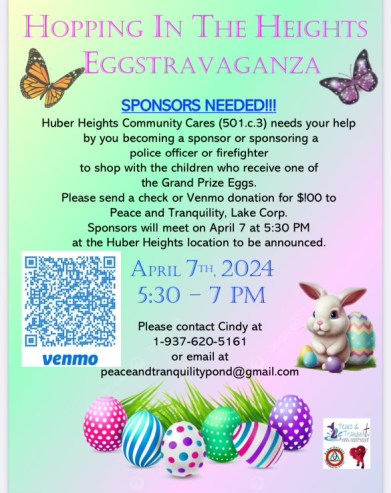
- Hopping in the Heights Egg Eggstravaganza
Sunday, April 7, 5:30pm-7pmLocation: Huber Heights (location TBA)
What to know: Hopping in the Heights Eggstravaganza is a suicide prevention outreach to bring awareness to suicide prevention, and to focus our area youth, with a positive outreach approach that is spring boarded off Easter.
- 2024 Centerville Merchant Market
Sunday, May 19, 12pm-5pmLocation: The lawn outside St. Leonard Living Community
8100 Clyo Rd, Centerville, OH 45458What to know:Over 100 vendors, live music, food trucks, drinks, and family friendly activities.
- Kettering Community Garage Sale
April 27, 2024, 9am-2 pmLocation: Charles Lathrem Senior Center
2900 Glengarry Dr, Dayton, OH 45420What to Know: Gently used and new items from 40 vendors, including craft supplies, decorations, books, outdoor items, tools, games, and more.
An Attempted Kidnapping in Miamisburg in 1906
Mrs. Pricket called for help and a growing crowd of Miamisburg residents was able to quickly overtake Martin as he fled with the girl. He dropped the girl and ran but was pursued by the mob halfway to West Carrollton and captured.
Martin was preparing to jump into the river but, anticipating his actions, a man from the crowd threw a bottle at him and struck him on the head, leaving a severe gash. Martin was in a state of shock from which he did not recover until after his arrest.
The child was taken back to her parents, suffering no physical injury but was traumatized by the incident. Martin was a 29-year-old man, deemed a degenerate by the papers. He was partially intoxicated when he was arrested and claimed to not remember even seeing the girl. Standing before Mayor Reiter, Martin hesitated as if deliberating before entering a plea of guilty. He was bound over to the grand jury and his bond was $1000. He was placed in County Jail in Dayton.
A Glimpse of Dayton in 1845

Ten Years of Dayton Unknown
- 400 Posts
- 1,297 Subscribers
- 102,600+ Views
- 494 Instagram Posts
- 3,098 Instagram Followers(@daytonunknown)
- 1200+ Likes on Facebook
- Two stories in the Dayton Daily News:
- One son born
- Two books published by Sara Kaushal, with another one possibly on the way!
- Murder & Mayhem in Dayton and the Miami Valley
- Dayton Ghosts & Legends
- We have met so many wonderful people.
- We have learned and shared an unquantifiable amount of facts about Dayton.
Most Popular Story: Hills and Dales Lookout Tower: The REAL Story
Sara’s Favorite Story: A Constable Finally Honored after 151 Years
Bethany’s Favorite Story: Other Daytons Part 1 and Part 2
As always, if you have any story ideas or questions you’d like us to look into, please let us know! There are so many ways to contact us – leave a comment down below, via the Contact Us page, send an email (daytonunknown@hotmail.com), send a message on Facebook or Instagram (@daytonunknown), etc.
Henry Stansel
Due to being slowed by an injured foot and shoes filled with water, Henry was captured by the Native Americans as they stole the horses from the settlement. Henry’s clothes were stripped from him, and he was forced to run through the trees while trying to keep up with the Native Americans on the stolen horses. When they finally stopped to camp, Henry was bound and tormented by his captors, as they callously showed him the scalp of his brother William. During his captivity, Henry was subjected to torture with the other prisoners, forced to run painful gauntlets and beatings.
Continue reading
 Dayton Unknown