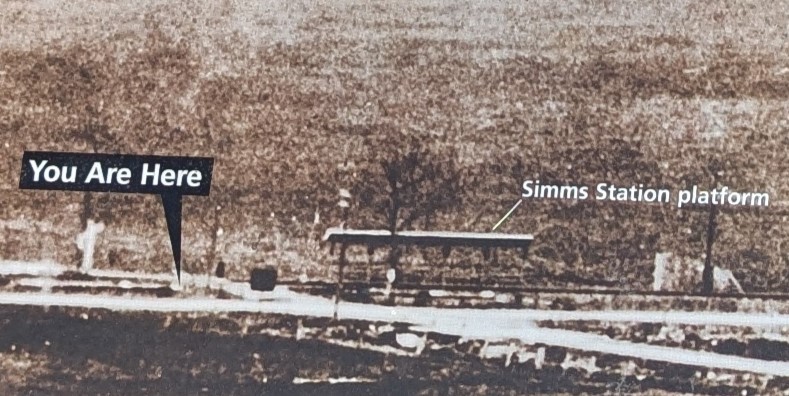
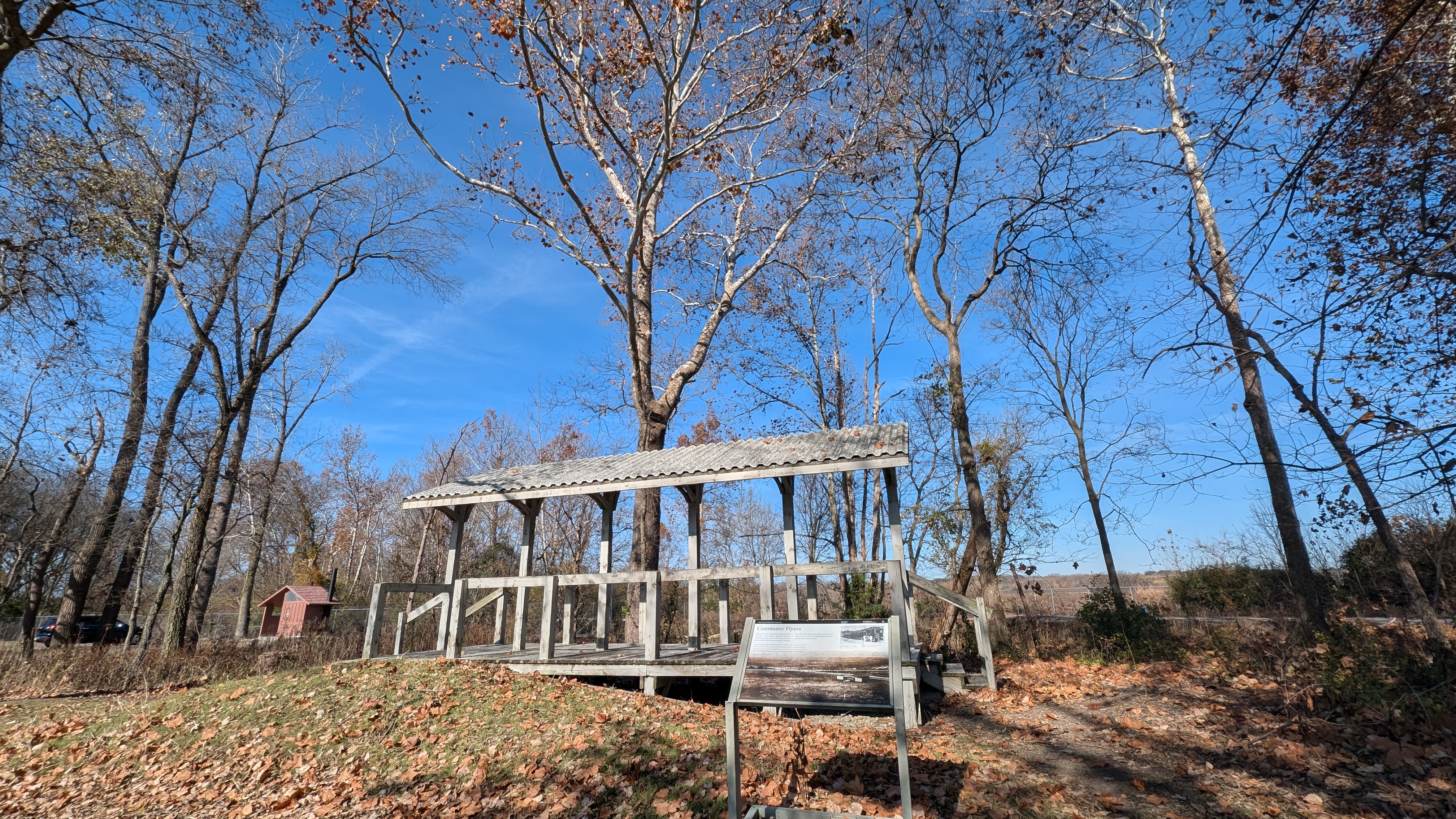
Did you know that if you go to Huffman Prairie to the location of the trolley stop station (Simms Station) and look at the sign, you can see a tree in the picture from over 100 years ago in both the picture, and right in front of you?

The Founder of the Society of Mary, Father Leo Meyer, came from Alsace to Cincinnati to serve as a missionary in 1949. He found the area in the midst of a cholera epidemic and volunteered to help. The next year he was sent by the Bishop to Dayton to serve at Emmanuel Church, where he met John Stuart.
Stuart owned 125 acres of farmland in the Southeastern section of Dayton. Stuart had come from Scotland and wanted to return, and Father Meyer wanted to establish a colony of Marianists. The two negotiated and made a deal. Stuart would give the land to Father Meyer and allow him to pay back when he could, and Father Meyer would give him his St Joseph Medal as collateral. It took twenty years to pay the debt and get back the medal.
Mary Stuart, infant daughter of John, was buried in St Henry Catholic Cemetery, on Main Street near Ashley and Frank Streets. When St Henry was sold and the bodies exhumed, Father Meyer moved Mary and her monument to the UD Campus in order to fulfill his promise to John Stuart that he would always care for the child’s grave. When the Marianist cemetery was established in the present location, Mary’s grave was moved along with the rest. Stewart Street is named for the Stuart family, but the name was misspelled.
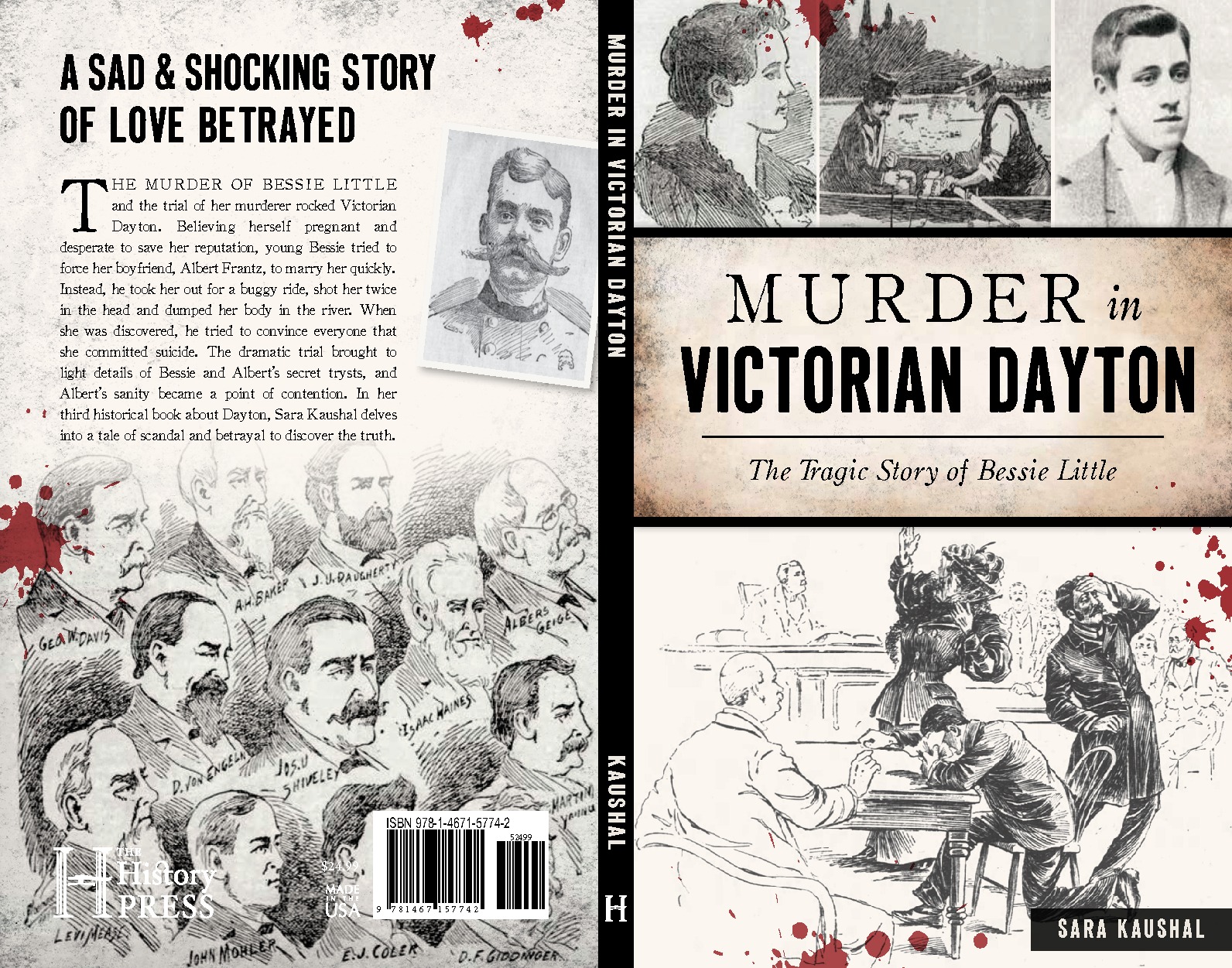
Sara’s next book will have a publication date! Murder in Victorian Dayton, the Tragic Story of Bessie Little will be available March 4, 2025. You can order directly from Sara’s Website, Amazon, or buy on March 29 2025 at the Paranormal Gathering at The Windamere in Middletown. Sara will be selling her books and speaking at the event.

Natalie was born in Dayton on July 28, 1932, to personnel administrator Ralph Moore and former artist Genevieve Converse Moore. Natalie grew up with what she referred to as an “Ohio life view”, which she described as “the feeling that certain things are right, and that’s that.”
Since childhood, Natalie wanted to be an illustrator. She studied at Laurel School in Cleveland and Smith College in Northampton, Massachusetts. Later, she married Samuel Babbitt, and together they had three children, born between 1956 and 1960.
Together, the couple created The Forty-ninth Magician, written by Samuel and illustrated by Natalie. Eventually Samuel became too busy to continue with books and Natalie was encouraged to continue producing children’s books. She started with short books, then continued on to children’s novels.
Children’s novels was where Natalie succeeded. For her books, she won the following awards:
Natalie’s writing career spanned four decades and produced 20 books she wrote and 10 she illustrated. She also illustrated five volumes in the Small Poems Series by Valerie Worth. She was a frequent contributor to The Times Book Review, continuing to write into her 70s.
Natalie died on October 31, 2016 at her home in Hamden Connecticut. She had lung cancer. She was survived by her husband Samuel, and her three children, Dr Christopher Converse Babbitt, Thomas Collier Babbitt, and Lucy Cullyford Babbitt.
Regarding the subject of immortality from Tuck Everlasting, Natalie echoed Angus Tuck. “I think that living forever would be a terrible thing,” she once said. “ It would be boring, sad and lonely.”
He was a 12-year member of the hostage negotiation team and the vice president of the Dayton Fraternal Order of Police. Grismer is a 1984 graduate of the University of Dayton with a degree concentration in journalism and a minor in criminal justice. In 2008 he helped produce the successful police exhibit at Carillon Historical Park, “Patrolling the Streets of Dayton.”
When the exhibit closed at Carillon, many people wished to keep the history of the Dayton Police Department alive. As one of the original architects of this Dayton Police History Exhibit, Stephen formed a non-profit organization dedicated to the preservation of Dayton police history. Dayton Police History Foundation, Inc. was chartered by the State of Ohio on January 1, 2010.
In addition to all of his service and contributions to the community, Stephen has written the following books:
Along with authors Judith Monseur and Dennis Murphy, Stephen Grismer also wrote:
—————————————————
Comparing the ages of local schools is a difficult task because the creation of early schools was an informal and often undocumented process. Schools were often one-room buildings established by ministers on church grounds.
The first school in the West Carrollton area was established in 1802 in Alexandersville, which is roughly where Woody’s Market on Dixie Drive stood. Dayton had a school district established by 1831. Miami Township is likely next given its proximity to the Great Miami River and the fact that settlements normally began near bodies of water. Area settlements began at Riverside and moved inland. The oldest settlements would have had the earliest schools. Van Buren Township School District was established June 24, 1841, when the township separated from Dayton.
Continue reading
In a statement, Cartwright commented, “I am thrilled and deeply honored to contribute to this incredible art facility. I truly believe that the expansion and survival of our culture depend on our unwavering support for both art and artists. The Rosewood Arts Center stands as a beacon for bringing hope and inspiring greatness in others.”
Cartwright will also have a permanent association with Rosewood as it introduces “The Nancy Cartwright Painting and Drawing Studio.”
 Dayton Unknown