
Long time friends Clifford “Tacks” Latimer and Charles Mackrodt had been enmeshed in an argument regarding Mackrodt’s dismissal from his job at the railway police force, where Latimer served as his superior.
The men met up at the southwest corner in front of the Commercial and Savings bank and walked across the intersection to the northwest corner, where they argued in front of the Steele Building. Witnesses overheard the men discussing a duel, and they agreed to walk to a nearby alley to engage. Apparently, Mackrodt changed his mind at the last moment and turned to walk away when Latirmer pulled out a revolver and shot Mackrodt three times in the back. One of the shots pierced his heart and caused instant death. The other two shots would have likely proved fatal as well.
Deputy Sheriff John Baugan witnessed the shooting and along with Sheriff Morris Sharp, ran to the scene and arrested Latimer, who still had the revolver in his hand. Latimer did not resist arrest. He was held in the county jail, charged with first degree murder. Latimer claimed he shot Mackrodt in self defense, but was ultimately convicted and sentenced to life in prison.
Seven Daschunds
Dye himself was an avid dog lover and was surprised at this answer. He mentioned that he had a dog of his own, a greyhound. To this, the German replied that the dogs he was worried about were faster and said that they were dachshunds. Dye roared with laughter at this response, imagining the tiny dogs racing past his greyhound. Indignant, the German replied that he had killed a man in Germany and immediately took the first boat out of the country. The dead man’s seven dogs followed him onto the boat, and he hadn’t a moment’s peace since. In the distance, the men heard the faint sound of dogs barking. Dye was still laughing at the story. The German retorted that he would fool the dogs that night. The pack barked and snarled outside Dye’s home all night. In the morning, when Dye went to wake the old man, he was gone. It appeared he had climbed out of the second-story window. From there, he climbed into a tree, then presumably leapt onto a passing wagon heading out of town—all to elude the dogs tracking his scent. He was never seen again, but the dogs remained outside Dye’s house for six nights before giving up on their target.
Read this and other tales of Bizarre Beasts in Sar’s book Dayton Ghosts & Legends, available through Amazon and major book retailers. Autographed copies available directly from the author on SaraKaushal.com
John Hinckley’s Visit to Dayton
Hinckley had been obsessed with the 1976 movie Taxi Driver, the premise of which was an assassination attempt. He was convinced he was in love with the leading actress, Jodie Foster.
Hinckley had been on a cross country campaign of his own, attempting to leave notes for and make contact with Foster. Her rejection of him sent him into a spiral. He needed to make a name for himself, he decided. After a while he determined the only way to get her attention was to shoot a president. Hearing about Carter’s election campaign, he traveled to Dayton to attend the next rally on October 2, 1980.
Hinckley stayed at the Sheraton Hotel at 21 S Jefferson Street and requested a room with a view of the Convention center where Carter would be speaking. He was given room 818 and paid a total fee of $35.52.
Fortunately for Carter and unfortunately for Hinckley, the crowd attracted was too large for Hinckley to be able to find a good point from which to shoot. Hinckley had left his weapons in his hotel room and was not in the mood to attempt to shoot after seeing the crowd.
After this event, Hinckley made several more attempts to shoot Carter and temporarily turned his sights to a leader of the American Nazi party. After many more failed attempts, he gave up and went home. During that time, he saw a psychiatrist, but did not mention his assassination attempts or his obsession with Jodie Foster.
When Carter lost the reelection campaign to Ronald Reagan, Hinckley turned his sights to President Reagan. He fired 6 shots and hit President Reagan and 3 of his attendants in front of the Washington Hilton before the Secret Service subdued him. President Reagan suffered a shot to the lung, missing his heart. During the chaos, he’d been shoved into the limo by a Secret Service agent and was unaware he’d been injured. He spent 12 days in the hospital before returning to the White House. Press Secretary James Brady was severely injured, suffering permanent brain damage after a shot to his head.
Hinckley was found not guilty by reason of insanity and committed to a mental health facility. He was ultimately released in 2018.
Local Author – Marcia Treadway
Marica may not appear as the type to have pursued ghost-hunting, yet there she was in Bellbrook, doing just that. Marcia’s instincts as a reporter led her to investigate phenomena that had no earthly explanations. Her skepticism soon became fascination and she couldn’t discount other people’s stories after witnessing a few bizarre happenings firsthand.
Marcia’s book, Transcending the Heart: When God Brought Me the Ghosts (soon to be renamed Seeker: From Skeptic to Believer) will captivate anyone who suspects there’s something beyond the universe other than what we can see or touch.
Dead and Gone
Immediately, the father sent a boy to fetch a doctor while the remaining family members carried Charles’s body into the bedroom and laid him on the bed. Efforts to resuscitate him failed and he was positioned and covered with a sheet until the doctor could arrive.
The doctor walked into the home within twenty minutes of the collapse. He noticed that the door to the bedroom was closed and the entire family was sitting in the room outside it. When he noticed the arrival of the doctor, the father jumped up to open the bedroom door for him. The doctor walked into the bedroom with the grieving members of Charles’s family (mother, father, two sisters) close behind. He noticed the rigid outlines of the body under the sheet and a cloth over the face. Through the cloth, the doctor could see facial features and the profile of Charles’s face.
When the doctor approached and lifted the cloth from the corpse’s face, he was stunned to see nothing under the cloth. He quickly pulled the sheet away from the body and saw only empty space. Despite having seen the outline of a body through the cloth, there was nothing on the bed. Stunned, the family members and doctor simply looked from one another to the bed, speechless. It took a moment for the three ladies present to react, swooning onto the floor. While the doctor attended to the ladies, the father stood in a dumbfounded state, muttering incoherently and staring unseeing into the distance.
Once the ladies were brought back to consciousness, the doctor walked to the only window in the room and studied it. The window was locked from the inside and had clearly not been opened for a while. Since there was no body, no coroner’s inquest was held. An investigation into the disappearance was made but no answers have ever been found. Charles J. Reed was dead and gone
Read this and other tales of the weird in Dayton Ghosts & Legends, available through Amazon and major book retailers. Autographed copies available directly from the author on SaraKaushal.com
1911 Pearls of Wisdom
- A cold, wet May, a barn full of hay
- Rain before seven, clear before eleven
- Tea kettle suddenly sings means news
- Move in the light of the moon for luck
- Broad front teeth mean that one is generous
- If a baby does not fall out of bed, it will be a fool
- A group of bubbles on a cup of coffee signifies money
- If a child cries out during baptism, it is the devil going out of it
- At cards it is bad luck to play against the grain of the table.
- Water spilled on the doorstep means the coming of a stranger
- Whoever eats the last piece of bread on the plate will be an old maid
Summer Events
- What’s Your Favorite Scary Movie? Art Show
Includes Hearse Cruise-In, Vendors, and Food
Secret Chamber of Oddities and Artwork
17 W Main Street, Fairborn
Friday June 13th, 3pm-5pm for the less energetic, 5pm-9pm, for those all in - Pickle Fest
Austin Landing
3700 Rigby Rd, Miamisburg
June 21st, 3pm-10pm - Greene County Strawberry Fest
Greene County Fairgrounds
120 Fairground Rd, Xenia
June 21st-22nd, 10am-5pm - The Great Dayton Food Truck Rally
104 Front Street, Dayton
July 11th, 5pm-9pm
July 12th, 11am-8pm - Columbus Book Festival
Columbus Metro Library
96 Grant Ave, Columbus
July 12th 10am-6pm
July 13th 10am-5pm - Gem City Comic Con
Marriott at UD
1414 South Patterson Blvd, Dayton 45409
July 19th & 20th 9am-4pm
Dayton Codebreakers – Sir Dermot Turing’s Visit
Desch and his team worked in one of NCR’s buildings decoding the messages using the American Bombe Machine and would then send the messages to Washington D.C. as intelligence. While working with the American Bombe Machine, Alan Turing – known for cracking Germany’s Enigma code – visited Joseph Desch in Oakwood and at the NCR building.
Retired RAF Captain Andrew Lloyd, along with the organization he founded, Oakwood Unsung Heroes, have been working to showcase this piece of history by having a City of Oakwood proclamation for the month of May to be Codebreaker Month, and they have an exhibit on display at Wright Memorial Public Library in collaboration with the National Cryptologic Museum.
On May 8th, the nephew of Alan Turing, Sir Dermot Turing, will be speaking at the Dayton International Peace Museum and at Carillon Park. For both events, tickets are free, but limited.
- May 8th at 11am @ Dayton International Peace Museum
- May 8th at 7:30pm @ Carillon Park
If you’re interested in reading more about this topic:
- X, Y & Z by Sir Dermot Turing
- The Codebreakers of Bletchley Park: The Secret Intelligence Station that Helped Defeat the Nazis by Sir Dermot Turing
- The Enigma Story: The Truth Behind the ‘Unbreakable’ World War II Cipher by Sir Dermot Turing
- Reflections of Alan Turing: A Relative Story by Sir Dermot Turing
- The Secret in Building 26: The Untold Story of America’s Ultra War Against the U-boat Enigma Codes by Jim Debrosse
Katt Williams to be Honored in Cincinnati
Williams was born in Cincinnati in 1971 and moved to Dayton with his Jehovah’s Witness parents. During that time, he learned multiple languages, including Creole and French, and he lived in Haiti for 18 months as part of religious missions. Williams emancipated himself from his parents at 13, then moved to Florida and supported himself as a street vendor.
Williams has found success through his stand-up comedy, acting, and music career. Although he has faced many legal issues, he has continued with his career and received an Emmy for Outstanding Guest Actor in a Comedy Series for his appearance on the show Atlanta. His “Heaven on Earth” comedy tour has dates across the US through November.
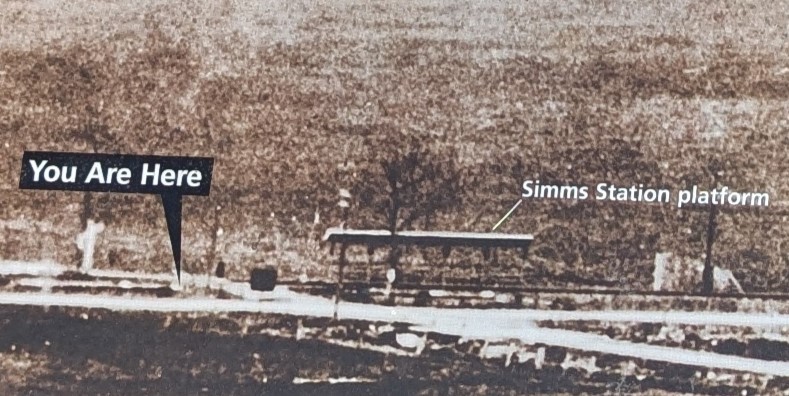
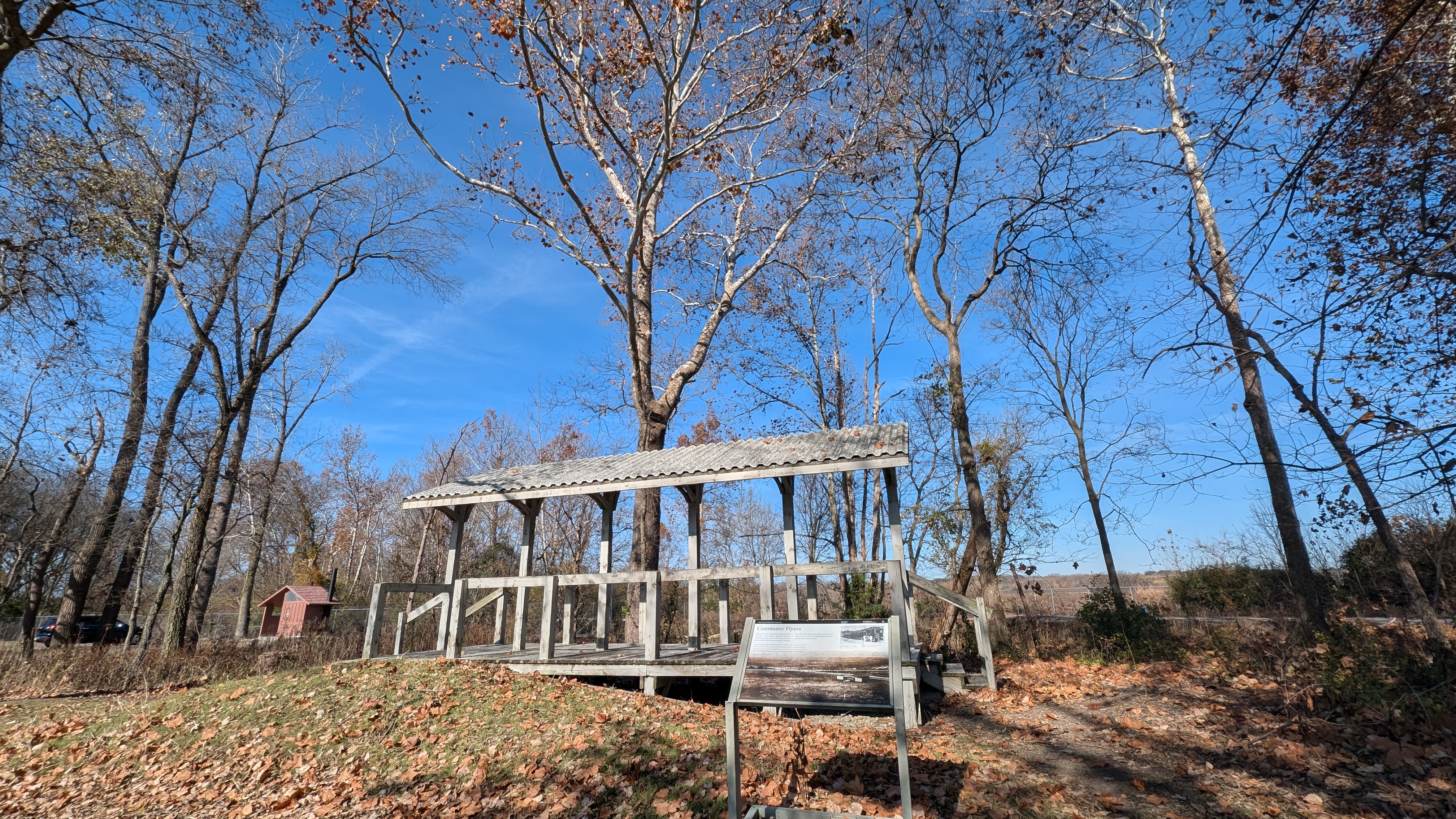
Huffman Prairie & Simms Station
 Dayton Unknown